Friday, September 9, 2011

Ok This will be the last one :
 This is a sort of checklist that I did after revising and I hope it will aid in my revision before the exams :)
 Science End o­­­f Year Examination:
Emphasis and main points:

Super-scripts- Control, Shift, +
Sub-scripts- Control, +

Important Key Ideas
1)      Element (H, Ca, Br, Al)
2)      Compound (Two or more elements chemically joined together) SO3.
3)      Ion (When atoms loose or gain electrons) Ca2+
4)      Molecules (Two or more atoms join together) H20, H2, O2
The number of molecule can be expressed monatomic, diatomic, triatomic and polyatomic.  
5)      Able to state the charges for the first 20 elements (H+,Ca2+, O2-, Cl-, Al3-, Li+, Na+, K+, Mg2+, N3-, Be2+)

Topic 1: Atomic Structure, Periodic Table, Ionic and Covalent Bonding

-          Know how the periodic table is arranged (In terms of increasing proton number, valence electrons of atoms and number of energy shells in atoms)
-          Know that the number of valence electrons can affect the properties of elements
-          Know that the alkali metals, alkali earth metals, halogens and noble gas belongs to Group I, II, VII, O respectively.
-          Charges and relative mass of the 3 sub-atomic particles: Proton (+) &1, Neutron (neutral) &1 and electron (-) &1/1836.
-          Know that atomic number= proton number, nucleon number= number of protons+ number of electrons.
-          Understand and identify elements that are isotopes and the characteristics of isotopes
-          The reasons for the use of relative mass.
-          Determine the group number (I,II,III,IV,V,VI,VII,O) and period given the electronic configuration.
-          Able to determine the electronic configuration given the atomic number and the mass number.
-          Able to determine if an element is a non-metal or a metal and state its ion charges with the electronic configuration
-          Able to draw the electronic configuration diagram
-          Understand the reasons for losing and gaining electrons (forming ions)
-          Know that metals lose electrons to from cations and non-metals gain electrons to form anions
-          Ionic bonding is between metal and non-metal atoms (bracket diagram)
-          Covalent bonding is between non-metal atoms (overlapping circle diagram)
-          To determine the number of bonds needed in covalent bonding, just take 8 minus the group number
-          Determine valency


­­­­­­­­­­Topic 2: Equation Writing / Acids, Bases and Salt
Know these BASIC ideas:
1)      Acid+ metal -> salt+ hydrogen
2)      Acid+ carbonate-> salt+ carbon dioxide + water
3)      Acid+ Base-> salt+ water (neutralization)
-          Acid+ Metal oxides-> salt+ water
-          Acid +Metal hydroxide-> salt+ water
4)      Base+ Ammonium salt-> salt+ ammonia+ water
5)      Alkali (A) + Salt (B) ->B Hydroxide + Salt (A) Where A and B are metals.
6)      The Solubility of Salts (ALL Sodium, Potassium and Ammonium salts are soluble; all halides except silver and lead are not soluble; all sulfates except barium and lead are insoluble.)
7)      Combustion Reactions produces carbon dioxide and water.
8)      Decomposition Reaction is where the reactants gets broken up into 2 or more products (either element or compound)
9)      Precipitation Method: In this type of reaction, two compounds which are water soluble react to form two new compounds,
10)  one of which is a precipitate (i.e. insoluble in water). 
11)  Some COMMON ACIDS AND ALKALIS:
12)  Know the soluble bases and insoluble alkalis:
-          Understand how to balance equations
-          Able to state the charges of the ions of specified elements
-          Able to determine the reactants and the products
-          Know the reactions when acids and alkalis, acids and metals and acids and carbonates are added together
-          Know the test for hydrogen and carbon dioxide and know the reactions such as effervescence  
-          Know the change of color for litmus paper
-          Be able to remember the difference between ammonia and ammonium, sulfide and sulfate
-          Know the chemical formula for hydrochloric acid, sulfuric acid and nitric acid.
-          Understand the difference between strength and concentration
-          Understand the importance of water in giving the properties of acids
-          Able to break down acids and alkalis and show the dissociation
-          Able to explain how to determine the strength of an acid and alkali
-          Able to identify if a solution is acid or alkali with the colors of indicators such as methyl orange and phenolphthalein and know the pH where the color changes
-          Know the difference between alkalis and bases and know that all alkalis are bases but not all bases are alkalis.
-          Know the difference between concentration and strength
-          Know the reactivity series for metals
-          Know the group which halides is referring to (Group VII)
-          Be able to explain why water is produced when acid is added to alkali


Topic 3: PHYSICS (Colors and Lenses)
-          ROY G BIV (colors of the spectrum)
-          Magenta, Cyan and Yellow
-          3 Primary colors: Red, Blue, Green
-          Red has the LONGEST wavelength, so it travels quickly through the prism and gets the least deviation. Violet on the other hand has the SHORTEST wavelength and travels slowly through the prism and gets the most deviation.
-          Observe and explain the effects of light passing through color filters
-          Explain the color of objects based on color absorption and reflection
-           
U =
Telescope (objective lens)
Real, inverted and diminished
U>2f
Camera Lens
Real, inverted and diminished
U=2f
Photocopier (same-size)
Real, inverted and same-size
f<U<2f
Photocopier (enlarged)
Real, inverted and magnified
U=f
Telescope (eyepiece lens)
Virtual, inverted and magnified
U<f
Magnifying glass
Virtual, inverted and magnified
-          Able to draw ray diagrams (know the 3 principal rays and know that rays that is not parallel to the principal axis meet at the focal plane instead)
-          Know what is focal length, focal point, principal axis, optic center, focal plane

Topic 4: PHYSICS (Reflection and Refraction of Light)
-          Specular and diffused reflection and know the characteristics of the image produced
-          2 laws of reflection (i= r, the incident ray, refracted ray and the normal lie on the same plane)
-          Know the 5 properties of image formed in the mirror (virtual, upright, laterally inverted, same-size, the object from the mirror is the same as the distance from the mirror the image)
-          Know the definitions of a virtual and real image. (A virtual image
-          Able to draw the ray diagram

Topic 5: PHYSICS (Refraction study, total internal Refraction and Application Study)
-          D-L-A (When light rays enter from a denser medium to a less dense medium, it bends away from the normal since the light ray travels faster in the less dense medium)
-          L-D-C (When light rays enter from a less dense to a denser medium, it bends towards the normal since the light ray travels slower in the denser medium)
-          Light refracts when in enters from a medium of a different optical density. This causes a change in the speed of light and then bending.
-          When light hits and enters a medium of different optic density perpendicularly (i= 0) the light ray would not be refracted since the incident rays is 0, the refracted ray is also 0. However, there will be a change in speed of the light ray in the 2 different medium.
-          Know the Reversibility of Light
-          Critical angle is the angle of incidence in the optically denser medium when the angle of refraction in the optically less denser medium is 90
-          Know the criteria for total interior reflection to happen
-          Able to explain why coins seem shallower, why pool depth seem shallower and why coins “appear” with the pouring of water and “disappearing” of coin.
Standardization of answers:


-          Know why a medium with a optically higher density has a smaller critical angle compared to medium which are optically less dense
-          Know where “total internal reflection” can be applied to in real life (endoscope, optic fiber, prisms)
-          The advantages of optic fibers (can be drawn into thin tubes, immune to electromagnetic interference, the data can be sent clearly without the need of any amplifiers, able to carry more information) 


Topic 6: Human Reproductive System

-          Know male reproductive system and its parts and be able to state its purpose
-          Know the uses of amniotic fluid, placenta and umbilical cord
-          Able to identify the 3 accessory glands that activates the sperms, provides alkaline fluids to neutralize the acidic tract in the birth canal and provides nutrients for the sperms.
-          Know the process which leads to erection and ejaculation
-          Know the female reproductive system and its parts and be able to state its purpose
-          Know where does fertilization usually take place
-          Know that copulation doesn’t necessary lead to fertilization
-          Know the functions of the acrosome, middle piece, minimal cytoplasm, flagellum and nucleus
-          Know that the outer layer of the ova is surrounded by zona pellucida and can be digested by acrosin, a protease enzyme
-          Know the difference between a haploid cell and diploid cell and understand why gametes only have a diploid number of chromosomes
-          Zygote-> Embryo-> Fetus
Know the Menstrual Cycle


Topic 7: HIV and Birth control Measures


Topic 8: Ecology
-          Carbon cycle and the importance of it. Understand the 3 process that allows carbon dioxide to be released back into the atmosphere. Extra includes burning of vegetations. That carbon dioxide can be removed from the air during photosynthesis, transfer of energy, and fossilization of dead organisms. For advanced, also know that oceans can absorb carbon dioxide from the air. The phytoplankton uses the carbon dioxide to photosynthesis and when they die, the carbon is accumulated in their body which become fossil fuels or minerals that upon combustion releases them back into the atmosphere again

-          Parasitism, mutualism, commensalism, competition, predatory, amensalism

-          Know that energy flow is non-cyclic and most are lost as heat energy

-          Nutrients however, can be recycled in an ecosystem. Feces, excretory products contain indigested carbon and are broken down by decomposers and nutrients are returned to the soil.

-          Know that autotrophs are always at the start of a food chain/web, followed by a heterotroph. Know primary consumers, secondary consumer and tertiary consumers. Herbivores, omnivores and carnivores

-           Also know how a ecological pyramids such as pyramid of biomass (always broad at the bottom), pyramid of numbers (depends) and pyramid of energy (always broad at the bottom) look like and their structures

-           Know how abiotic factors can affect biotic factors and the importance to maintain equilibrium in the ecosystem.

-          Understand that only 10% of the energy is passed on to the next consumer as 90% of the energy is used in respiration, growth, cell replacement etc.

-          Understand that energy decreases with increasing trophic levels

-          Explain the terms habitats, populations, community, ecosystems.

-          Know the importance why man needs to conserve the environment (1.Nature appreciation and as a recreational area 2.Marine life as a source of food 3.Gene pool for future needs in agricultural industries 4.Provides precious opportunities on study of revolution 5.Prevents extinction of plants and animals 6.To prevent alteration of natural process ex: hydrological cycle)


1 Ace that I would like to share :

Q2. Suggested topic for journal writing: Fibre optics, which make use of total internal reflection of light are also used in medicine. For example a bronchoscope is inserted into through the mouth into the lungs. Light is sent down the outer fibres to illuminate the lungs and the reflected light returns up the central core set of fibres. Find out more about the use of fibre optics in other medical equipment such as endoscopes and colonoscopies.

A Journal: Applications of Fiber Optics in Medical Industry


Fiber Optics
Fiber Optics is a major invention which increases the efficiency of telecommunications and also the medical industry. Fiber Optics is a piece of tiny glass which is thinner than a strand of hair. It may be coated with a layer of plastic to prevent scratches as it the information might be refracted out of the tiny scratch. It works with the rule of total internal refraction whereby the information enters the fiber at an angle greater than the critical angle. Total internal refraction occurs and there is 0% signal loss. Copper wire has been replaced by it as there is lesser need to re-amplify the signals and the information transported remains clear. More information can also be carried as multiple optical fibers can be bundled together into the diameter similar to a copper wire. It has even now expanded to the medical industry, being used in the endoscopes and colonoscopies.
Endoscope
The use of fiber optics allows the doctors to catch a glimpse of the organs inside the body and to identify the illness that the patient is suffering without the need to make cuts on the body. Fiber optic endoscopes are delicate and expensive items. The fibers have to be made of special glass, and each fiber has to be coated with a layer of glass of a different refractive index. In addition the orientation of fibers in a bundle used for endoscopy has to be "coherent", that is, the spatial orientation of each one of thousands of fibers has to be constant and not tangled up like the fibers in a rope. Each endoscope has one set of fiber bundles to transmit light inside, and another set to transmit reflected light out to the eye of the viewer. Patients are usually given dosages of anesthesia. The endoscope is inserted into the body from the mouth, where it slides down the esophagus before reaching the stomach and small intestine. An endoscope has parts consisting of a rigid or flexible tube (of which contains the optical fibers), a light delivery system to illuminate the organ or object under inspection. The light source is normally outside the body and the light is typically directed via an optical fiber system, typically a relay lens system in the case of rigid endoscopes or a bundle of fiber optics in the case of a fiberscope, an eyepiece, an additional channel to allow entry of medical instruments or manipulators. It can be used to identify many different diseases in the intestines, duodenum and esophagus. The images can be viewed on a monitor and one black dot on the monitor represents one broken fiber.
The colonoscopies are inserted into the body via the rectum. Colonoscopy can remove polyps as small as one mm or less. It can go into the colon and parts of the bowel. Once polyps are removed, they can be studied with the aid of a microscope to determine if they are precancerous or not. The colonoscopies also make use of the fiber optic to transmit the view of the colon and bowel. This actually saves a lot of trouble without cutting open the stomach and performing operations and greatly decreases the after effects of treatments.  


Wednesday, September 7, 2011

Last reflections :(

 My aim still stay the same. To get an A1 in the exams. To pursue my passion in Science and to join SMTP next year. I have also found Science marvelous. Though it can be strenuous at times to understand formulas and comprehend facts, the feeling of accomplishing it at the end is indescribable. Just to do a rough revision at the same, time, I have made my own notes for Term 1's Chemistry topics. I'm still in the midst of revision, trying my very best to refresh my memory, Guess this will be the start of another journey. Next term will be a BIG RUSH, but there will be a visit to MacRitchie reservoir (? Not very sure) but if there is, I guess it will be another good learning opportunity for me. I can study about the biodiversity, the organism there and the relationship between one another (mutualism,competition, predator-prey relationship, parasitism) and the abitotic factors too. I would like to wrap things up, with a big thank you for Miss Lim. I am able to achieve 3 A1's this year. Compared with only 1 A1 last year. Seems like I'm getting one more step closer to understanding and feeling the "pulse" of Science. Science did give me a new impression and perspective of the world. If I can have the chance, I would like to choose biology next year, to accomplish my dream of becoming a doctor.

Monday, August 29, 2011

Science Breakthrough-- The discovery of the Immortal Jellyfish


Do all living things die? Do all living things age? This particular species of jellyfish, known as the Turritopsis Nutricula seemingly never dies! This jecclyfish can regenerate itself over and over again. The process used by the jellyfish to accomplish this feat is called transdifferentiation. Transdifferentiation is the ability of one cell to change into another type of cell; the Turritopis Nutricula can do this to its entire body. Salamanders use this ability on a smaller scale when they re-grow a lost tail. In simpler words, transdifferentiation in biology takes place when a non-stem cell transforms into a different type of cell, or when an already differentiated stem cell creates cells outside its already established differentiation path.Since the Jellyfish do not die, their numbers increase without a natural death holding it back. Once native the Carribean the Turritopsis Nutricula has now spread throughout oceans across the world and it might actually upset the natural balance. The Telegraph reported that Scientist have stumbled upon “The font of eternal youth”, Dr. Maria Miglietta from the Smithsonian Tropical Marine Institute chimed in the article saying, “We are looking at a worldwide silent invasion.” (Telegraph. Meanwhile, experts have already started to work the jellyfish, wondering if it could be the key to an anti-aging medicinal breakthrough. If the jellyfish’s reverse aging technique could somehow be implemented in humans there is no telling what could become medically feasible. Perhaps this jellyfish will put pharmaceutical companies out of business. Who Knows, Humans might be immortal one day :) and it certainly does go against the laws of science that states that all Living Things will die. :)

Friday, August 26, 2011

Term 3 Class Test+ Reflections


I have met my target:) This time my aim was a 37 and or above, and with a pinch of luck, I've got 37 again. There will be no more tests and the next challenge facing me would be the end of year exams. Some reflections to make for this test: I need to look deeper into data analysis in the science test this time. I lost most of my marks in the test at this section :( I have also started devising a plan for my exams, and to start revising on chemical equations and acids and alkali. My aim is to get into SMTP next year, so science is a fundamental aspect in the criteria. I love Science so I have confidence to do well. Hey! This however doesn't mean that my target has been met. This is a little ironic.. HoHo. It should be" This however doesn't mean that my AIM has been met." Everyone's aim is too score full marks, so is mine. Now, I understand that so much hard work must be put in. Marks and accomplishments don't appear out of nowhere, it takes effort and time. I only know that I worked hard and looking back now, it is really a time to behold! 

Monday, June 27, 2011

Something SHY


We know how copulation can result in pregnancy. However, in modern day society, many people are not only seeking for their pursuits and also the increasing cost of child raising in developing countries. As a result, birth control methods are introduced.There are 2 types of birth control methods, the temporary birth control and the permanent birth control. For temporary birth control, once its removed, a couple can get pregnant again. However, permanent birth control is irreversible. Such examples are vasectomy and tubal ligation. Vasectomy is the cutting and tying up of the sperm ducts to prevent sperms being ejaculated from the epididymis. Tubal ligation is the cutting and tying up of the fallopian tubes. In this way, no ovum can reach the uterus for implantation and no sperm can reach the ovum. The temporary methods includes rhythm, condom, withdrawal, Pill, diaphragm, IUD. Just to name a few. Being the most common, the condom. It is latex fitted over the penis of the man to hold the sperms after ejaculation. The diaphragm also acts in the same way, but being fitted on the cervix by a doctor. The IUD, being much rarer is "The intrauterine device (IUD) is a form of birth control; it is an object, placed in the uterus, to prevent pregnancy.[1] Among modern IUDs, the two types available are copper-containing devices, and a hormone-containing device that releases a progestogen." From WIKI.

Saturday, June 25, 2011

Some expectations for Term 3

With the start of the new term tmr, I am looking forward the the science lesson. It's going to be whole new topic on biology, with a tinge of physice which I hope I can manage well this time. Again, I have set my target for my science test to be at 37 and or above. I have also devised a plan where I will revise the lessons learnt after each science lesson lesson! Hope this helps, The next time I post will be the results and reflections. Work Hard :)

Monday, June 13, 2011

CARBON CYCLE

Actually I've always believed that carbon, which can also exists as carbon dioxide is bad for the environment. Yes, its true but after my self-learning through ecology(P.S I did this during the hols), the carbon cycle is THE ROOT TO ALL LIFE. This simple cycle ensures that carbon dioxide in the air is always kept constant, not too much, nor too little. During photosynthesis, plants take in carbon dioxide and give out oxygen. The carbon dioxide is turned into complex materials such as sugars, amino acids and stores energy. When the plant is eaten by the autotrophs on the next tropic level, the energy stored in the carbon is passed on to it. The autotrophs releases carbon back to the atmosphere when they are respiring. The feces and animal waste also contains the ingested carbon. Decomposer such as fungi and bacteria feed on them. When the bacteria and fungi respires, carbon dioxide is again released into the atmosphere. When organisms die, decomposition occurs and the same process goes on. By chance, the dead organisms can become fossil fuels or coals. They store tremendous amounts of carbon energy and it is released via combustion. Large amounts of carbon dioxide are released back into the atmosphere. Luckily, the plants take in more carbon dioxide compared to its intake of oxygen and this prevents the level of carbon from getting to high. THE 3 PROCESS THAT IS ESSENTIAL FOR RELEASE OF CARBON IS RESPIRATION, COMBUSTION and DECOMPOSITION. The carbon cycle is important as it transfers energy from one organisms to another as energy are locked up in the carbon. It also ensures that there is enough carbon dioxide in the air for the plants to photosynthesis and ensures that ecosystem, food chain and webs are disrupted. YAY! So next time you are respiring, remember that U are part of the cycle TOO!

Sunday, May 29, 2011

Female Reproductive System

The female reproductive system is a little more complex than that of the male's. This includes the menstrual cycle.

The female gonads are the ovaries. They produce female gametes which are known as eggs or ova. The ovaries contains thousands of eggs but only about 400- 500 become mature in a woman's life. The ovary stops releasing eggs when the woman reaches about 50. This is known as menopause. The ovaries also produce female hormones such as oestrogen and progesterone. The fallopian tubes/oviducts is where fertilization occurs. The uterus/ womb is where the fertilized embryo further develops into a baby. The cervix is expands during childbirth. The vagina is a passage linking the vulva to the cervix. A man's penis enters the vagina during sexual intercourse and deposit sperms there. The sperms can them swim up to the fallopian tube where fertilization occurs.
The Menstrual Cycle

The menstrual cycle usually lasts about 28 days. The first day of menstruation is also the first day of the menstrual cycle. Before we go into this we need to look at the maturation of the eggs in the ovaries. The ovaries contains thousands of eggs or also known as primary follicles. Each month, only one will become mature. The mature egg is known as Graafian Follicle. They will be released from the ovaries and this is known as ovulation.After ovulation, the graafian follicle develops into Corpus Luteum .On the first five days of the menstrual cycle, the uterus lining breaks down.The wastes and bloods are discharged from the uterus in the body through the vagina. The anterior pituitary glands secretes follicle stimulation hormones (FSH). The FSH stimulates the maturation of the hormones. It also stimulates the follicles to secrete oestrogen. From day 6 to 13, the oestrogen helps the uterine lining to recover and build up again. An excess of oestrogen will stop the secretion of FSH w=and prevents more follicles from maturing. The oestrogen makes the pituitary gland secrete LH. The LH allows the graffian follicle to become corpus luteum. The corpus luteum secretes progesterone which helps to maintain the uterus lining for a number of days. If no fertilization occurs, it gradually breaks down.

Friday, May 27, 2011

Reproduction in Humans -- SELF STUDY IN THE JUNE HOLS


When we reach the age of 12-15 we boys start to notice changes in our body. Our reproductive organs get larger. Today, I will be reflecting on what I had learnt about the male reproductive system.
We
We will start with the testes. The male reproductive system contains two ovules of testes. They produces sperms. The epididymis stores inactive sperms before they are released into the sperm duct. The sperm duct loops over the ureter and opens into the urethra. The Prostate glands, Cowper glands and seminal vesicles releases fluids that contains nutrients and mixes them with the sperms before it is released from the urethra in the penis. This fluid actually activates the sperms. The mixture of sperms and the fluid is called semen.

Anatomy of a Sperm


The head of the sperm contains the nucleus, cell membrane and the acrosome. The acrosome is important as it contains enzymes to break through the cell wall of the female egg cell. The mitochondria produces energy for the sperm to swim to swim towards the egg to fertilise it. The tail or also known as flagellum allows the sperm to swim to the egg cell.

Term 2 Class Test + Reflections


I scored 29 out of 37 in this term's class test. It's a A1, but.... its LOW. I found that I did not revise thoroughly enough. My weaker areas are in Light and chemical equations. Although I spent a lot of effort trying to comprehend and understand how to draw the ray diagrams, I still didn't do well. I also didn't go through the combustion equations and I lost one mark :( I feel that I have troubles answering the light questions and drawing ray diagrams. Majority of the class did very well so I think its time for me to push myself even harder so I could strive for the better in the Term 3 Science Test which is focusing on Biology. With the help of my friends which specializes in Biology, I hope i can score an 80++ in the next test. HERE I COME :)

I also devised a plan and a motto for myself:
Never GIVE UP :)

Friday, March 11, 2011

Quartz Watch

Many of us have heard about quartz crystals keeping time accurate but I was wondering what exactly do these quartz do to keep the watch to maintain its staggering precision?

LET'S START!
Video;
http://www.youtube.com/watch?v=1pM6uD8nePo

Quartz Basic:Quartz is the most common mineral found on Earth. They are transparent or can be known as "crystals" which your mom wears as jewellery since they are nice, attractive and shiny!

Before Quartz
The wind-up watch is an amazing piece of technology itself! It is part of a continuous research-and-development effort that started at the end of the 14th Century. Over the years, different innovations made wind-up watches smaller, thinner, more reliable, more accurate and even self-winding!

The components that you find in today's wind-up watches have been around for centuries:

1)A spring to provide the power
2)Some sort of oscillating mass to provide a timebase
3)Two or more hands
4)An enumerated dial on the face of the watch
5)Gears to slow down from the ticking rate of the oscillating mass and connect the mass and spring to the hands on the dial

Then came the quartz....

There was no problem with the choice of a timing element. The quartz crystal is possibly thousands of times better for timing than the tuning fork, and quartz crystals had been around for many thousands of years. Only the type and the frequency of the crystal needed to be chosen. The difficulty was in the selection of the integrated circuit technology that would function at sufficiently low power.

Quartz crystals have been in regular use for many years to give an accurate frequency for all radio transmitters, radio receivers and computers. Their accuracy comes from an amazing set of coincidences: Quartz -- which is silicon dioxide like most sand -- is unaffected by most solvents and remains crystalline to hundreds of degrees Fahrenheit. The property that makes it an electronic miracle is the fact that, when compressed or bent, it generates a charge or voltage on its surface.(this is why the clock is so accurate!) This is a fairly common phenomenon called the Piezoelectric effect. The electronics of the watch initially amplifies noise at the crystal frequency. This builds or regenerates into oscillation -- it starts the crystal ringing. The output of the watch crystal oscillator is then converted to pulses suitable for the digital circuits, which sends the clock ticking!

In Conclusion:
It works by using the piezoelectric effect: if a small voltage is applied to a specially prepared crystal of quartz it vibrates at a definite and almost constant frequency which can be used to power a tiny motor to turn the hands of the watch.

Read more: http://wiki.answers.com/Q/How_does_a_quartz_watch_work#ixzz1GODFJHzq

Thursday, March 10, 2011

Term 1 Reflections

I fell that I did quite ok for my science test this term. I hope I can score as well as my this test. I made some mistake in Section B for not memorizing the correct formulas:

1)Acid + Bases= Salt + Water
2)Acid + Carbonate= Salt + Carbon Dioxide + Water
3)Acid + Metal= Salt + Hydrogen

Atoms are quite easy to understand.Before test preparation, I suddenly went confused between ionic and covalent bonding and this caused a lot of panic.Luckily, I managed to overcome them. My aim is too get an exemption for exams. Miss Lim is there exemption, my friends says there isn't this year! Even if there is none,I will still try my very best to break my own records. I got 26/40 for last years science test 1 but I broke it this time with 38/40. Though i am already satisfied, but next terms test will be even harder than this.So I must work even harder!But when it comes to acids, bases and salt, I am starting to feel the pressure. I think I am bad in Physics so I must work hard now.

Miss Lim can I see you after the school holidays with Wen Feng? We have got so much questions to ask and we went to the staff room 5 times consecutively for 2 days to find you but you were not there :) Thank You

Post 1 (SUMMARY OF WHAT I'VE LEARNT IN T2 SABBATICAL)

Why use Solar Energy / Renewable sources of energy?

1) Serious depletion of natural resources such as oil, coal and natural gases etc...
Increasing prices of oil, thus electricity usage at home will become more expensive.
2) Environmental problems, huge amount of carbon dioxide emission from the burning of petroleum to produce electricity, toxic gases from cars.


Solar Panel Basics: (To Add on to what I've learnt in Sabbatical)

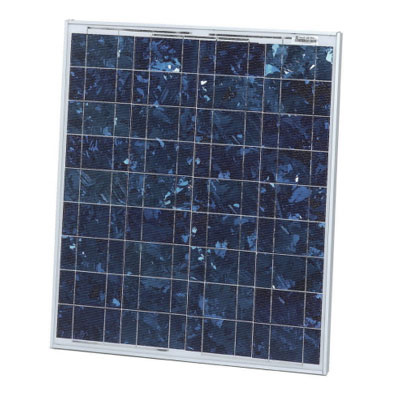
A solar panel (photovoltaic module or photovoltaic panel) is a packaged interconnected assembly of solar cells, also known as photovoltaic cells. The solar panel can be used as a component of a larger photovoltaic system to generate and supply electricity in commercial and residential applications.
Because a single solar panel can only produce a limited amount of power, many installations contain several panels. This is known as a photovoltaic array. A photovoltaic installation typically includes an array of solar panels, an inverter, batteries and interconnection wiring.
There are mono crystalline solar panels or poly crystalline ones and amorphous. composed of a number of different crystals, fused together to make a single cell (hence the term 'multi'). Monocrystalline, as the name suggests, is constructed using one single crystal, cut from ingots. This gives the solar panel a uniform appearance across the entire module. These large single crystals are exceedingly rare, and the process of 'recrystallising' the cell is more expensive to produce. Amorphous offer better performance in higher temperatures, and have some benefits in shady locations.


Mono Crystalline Solar Panel


( This is very efficient!)
Poly Crystalline Solar Panel


Amorphous Solar Panel

How does a solar panel generate electricity?
You've probably seen calculators with solar cells -- devices that never need batteries and in some cases, don't even have an off button. As long as there's enough light, they seem to work forever. You may also have seen larger solar panels, perhaps on emergency road signs, call boxes, buoys and even in parking lots to power the lights.

Although these larger panels aren't as common as solar-powered calculators, they're out there and not that hard to spot if you know where to look. In fact, photovoltaics -- which were once used almost exclusively in space, powering satellites' electrical systems as far back as 1958 -- are being used more and more in less exotic ways. The technology continues to pop up in new devices all the time, from sunglasses to electric vehicle charging stations. Basically, when light strikes the cell, a certain portion of it is absorbed within the semiconductor material. This means that the energy of the absorbed light is transferred to the semiconductor. The energy knocks electrons loose, allowing them to flow freely and this is electricity!

Diagram:


The Process Of installation::
Survey of site and system design > Product delivery > Roofing work > Installation > System Testing > System Commission

These amazing little things help U to save electricity with the help of the most prehistoric but mandatory source of energy-the light! However, most solar projects normally take roughly 11 to perhaps 20 years for installers to earn back money or to get returns.

Some Big Solar Farms


WELCOME TO THE AGE OF GREEN ENERGY